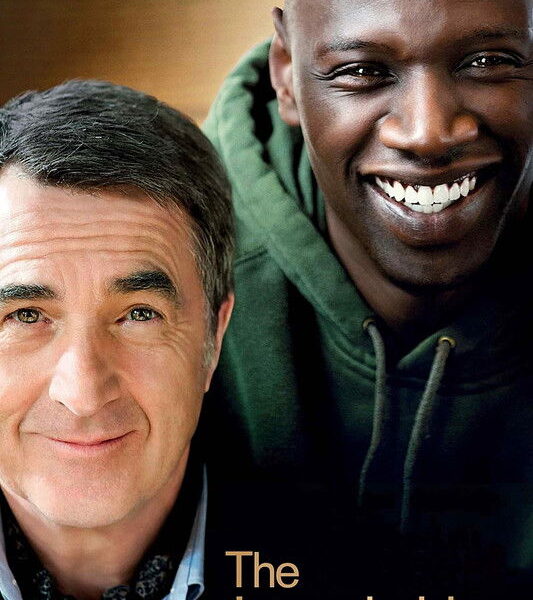
The Intouchables: Ending Explained — Ultimate Breakdown
Few films have captured the transformative power of an unlikely friendship with the raw honesty that The Intouchables delivers. Directed by Éric Toledano and released in 2011, this French masterpiece builds toward a finale that is deceptively simple on the surface yet devastatingly profound underneath. What appears to be a feel-good farewell is actually a meditation on freedom, dignity, and the terrifying courage it takes to truly connect with another human being.
The Intouchables: What happens at the end
Philippe, the quadriplegic aristocrat played by François Cluzet, has grown increasingly dependent — emotionally, not just physically — on his caregiver Driss, portrayed with luminous charisma by Omar Sy. But Driss recognizes that his presence has become a comfortable cage for Philippe. Rather than enabling stasis, he makes the selfless decision to leave, arranging for a more qualified replacement and walking away from the life they had built together inside the walls of that magnificent Parisian mansion.
The film’s closing sequence reveals that Philippe has been corresponding with a woman named Éléonore, a pen pal he had been too terrified to meet in person. Driss, in a final act of loving interference, orchestrates their meeting at a seaside restaurant. He watches from a distance as Philippe and Éléonore make genuine, vulnerable contact for the first time. The camera then reveals the real Philippe Pozzo di Borgo and Abdel Sellou, the actual men who inspired the story, confirming the film’s extraordinary real-world roots.
The deeper meaning
The ending is a masterclass in the metaphor of liberation. Throughout the film, Philippe‘s paralysis functions not only as a physical condition but as a symbol of emotional imprisonment — a man retreating from life behind wealth, routine, and intellectual armor. Driss, paradoxically the one who appears to need rescuing, is the one who holds the key. His departure is not abandonment; it is the ultimate gift of pushing Philippe back into the dangerous, necessary current of living.
Éric Toledano‘s intention is unmistakable: true care sometimes means refusing to be someone’s entire world. The film argues passionately that comfort, when it becomes total, becomes its own form of disability. By engineering the meeting with Éléonore, Driss completes his role not as a caregiver but as a catalyst — someone who arrived to shake the dust off another man’s soul and had the wisdom to leave before he became the dust himself.
Hidden details & easter eggs
The seaside restaurant where Philippe finally meets Éléonore is not chosen arbitrarily. The ocean, vast and uncontrollable, echoes one of the film’s earliest and most charged sequences — the illegal high-speed drive along the Seine where Driss first makes Philippe feel genuinely alive and recklessly present. Water, in Toledano’s visual language, consistently represents the uncontainable life force that Philippe has been denying himself. The location whispers: this is what you have been running from, and it is magnificent. Find more context about the film on IMDB.
Connections to the rest of the film
The ending resolves one of the film’s most elegant pieces of foreshadowing: early in the story, Philippe confesses to Driss that he has never met Éléonore in person because he fears she would flee upon seeing his condition. Driss responds with characteristic bluntness, calling this cowardice by its proper name. That exchange plants a seed that the finale harvests with precision — every moment of bold living Driss forced upon Philippe was secretly preparing him for this single act of courageous vulnerability at the water’s edge.
Fan theories
One compelling theory suggests that Driss never truly intended to stay permanently, and that his entire tenure as caregiver was a conscious, almost therapeutic intervention — he instinctively understood that Philippe needed to be broken open, not maintained. Evidence for this includes his relaxed attitude toward rules from day one. Against it stands the genuine emotional rawness of his departure scene, which reads less like a calculated exit and more like a man surprising himself with his own wisdom. Both readings enrich the film rather than contradict each other, which is the mark of genuinely layered storytelling.
FAQ
Does Driss actually abandon Philippe at the end of The Intouchables?
No — Driss leaves Philippe deliberately but lovingly, recognizing that their bond had become a substitute for the fuller life Philippe deserved. His final act is arranging Philippe’s meeting with Éléonore, proving the departure is an act of care, not abandonment.
Who is Éléonore and why does she matter to the ending?
Éléonore is Philippe’s pen pal, a woman he had been too afraid to meet in person due to his paralysis. Her appearance in the finale represents Philippe’s ultimate leap of faith — the emotional breakthrough the entire film has been building toward.
What does the real ending after the credits reveal?
The film closes by showing the actual Philippe Pozzo di Borgo and Abdel Sellou — the real men behind the story — confirming that this extraordinary friendship and its emotional resolution genuinely happened, lending the ending an additional layer of moving authenticity.
Why does Driss watch from a distance rather than joining Philippe and Éléonore?
His choice to observe from afar rather than participate signals that his role is complete. He is no longer Philippe’s world — he is proof that Philippe can build one of his own, and watching that happen is his quiet, dignified reward.
Is the ending of the film faithful to the true story?
Largely yes — Philippe Pozzo di Borgo did eventually find love and remarried, with Abdel Sellou’s influence credited as a turning point in his emotional recovery. The film compresses and romanticizes certain details, but the emotional truth of the conclusion is grounded in real events.