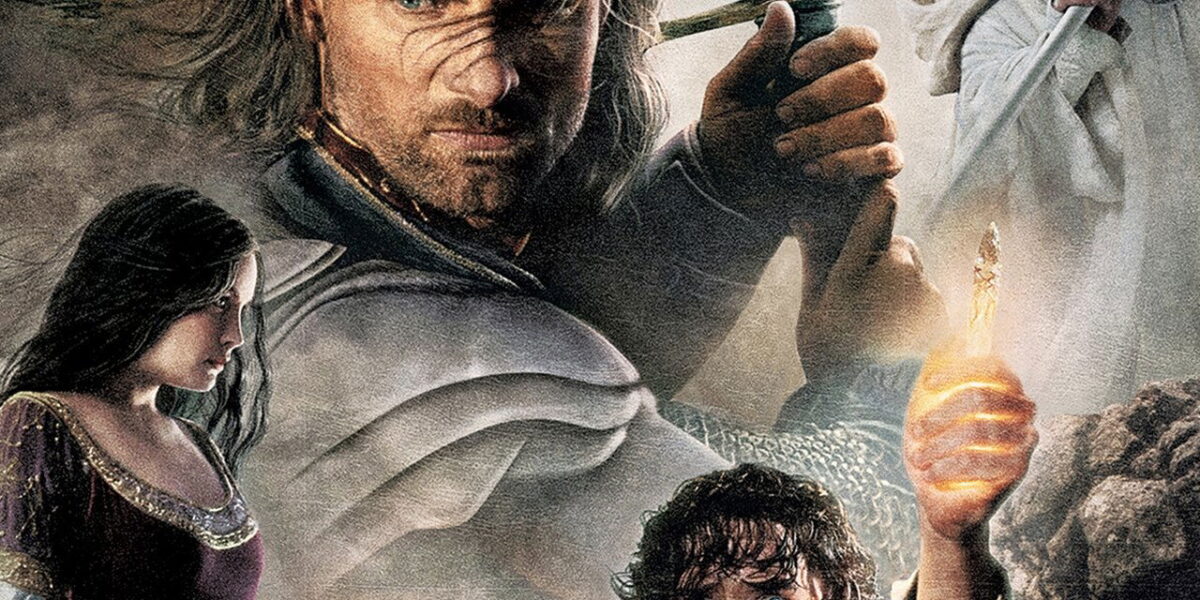
The Lord of the Rings: The Return of the King: Ending Explained — Ultimate Breakdown
Few endings in cinema history carry the emotional and philosophical weight of The Lord of the Rings: The Return of the King. Peter Jackson’s concluding chapter isn’t merely a battle won or a ring destroyed — it is a meditation on sacrifice, loss, and the irreversible cost of heroism. To watch it closely is to understand that victory and grief are not opposites but inseparable companions, bound together like Frodo and the darkness he carries within.
The Lord of the Rings: The Return of the King: What happens at the end
At the fires of Mount Doom, Frodo Baggins — broken by the Ring’s corrupting weight — claims it for himself rather than destroying it. It is Gollum, in a savage act of desperate obsession, who bites off Frodo’s finger and tumbles into the volcanic chasm, inadvertently completing the quest. The One Ring is unmade. Sauron’s tower crumbles. His lidded eye collapses inward like a dying star, and the armies of Mordor dissolve into dust and ruin across the Pelennor Fields.
Frodo and Sam are rescued from the lava-surrounded rock by the great Eagles summoned by Gandalf. They awaken in Minas Tirith to joyful reunion. Aragorn is crowned King of Gondor and pledges his life to Arwen. Yet the final act belongs not to kings, but to hobbits — and specifically to one quiet, wounded soul who can no longer find peace in the Shire he fought so desperately to save.
The deeper meaning
The destruction of the Ring is a profound metaphor for the impossibility of destroying evil through individual willpower alone. Frodo fails — and that failure is intentional, morally courageous storytelling. Jackson and Tolkien dare to suggest that prolonged exposure to absolute corruption leaves permanent scars. The hero does not emerge triumphant and unscathed. He emerges hollowed, changed, unable to re-enter ordinary life. This is not weakness — it is the truest portrait of trauma ever committed to fantasy cinema.
Jackson’s intention in the Grey Havens farewell sequence is to honor the cost that war and suffering extract from the most sensitive souls. Frodo departing on the ship while Sam returns home is a visual metaphor for survivor’s guilt and spiritual exile. The director deliberately frames the departure as bittersweet rather than triumphant, insisting that some wounds cannot be healed in the mortal world, and that certain forms of peace must be sought beyond the boundaries of the known.
Hidden details & easter eggs
Watch carefully as Frodo touches the scar on his shoulder at the Grey Havens — the wound inflicted by the Morgul blade on Weathertop, which never truly healed. This subtle gesture connects the ending directly to the Fellowship’s earliest dangers, reminding the audience that the journey began with a poisoning that never stopped spreading. Additionally, the symmetry between the film’s opening shot of the Shire and its closing image of Sam walking home to Bag End creates a visual circle — a world saved, unchanged in appearance, yet irrevocably altered in meaning.
Connections to the rest of the film
The ending’s emotional power is built on layers of foreshadowing seeded throughout the trilogy. Early in the film, Gandalf warns that the Ring grows heavier as Frodo approaches Mordor — a prophecy of inevitable moral collapse rather than physical failure. Gollum‘s role as accidental savior is prefigured by Gandalf‘s words in The Fellowship of the Ring: “even the very wise cannot see all ends.” The mercy shown to Gollum by both Bilbo and Frodo becomes, retroactively, the act that saves the world.
Fan theories
One compelling theory argues that Frodo intentionally allowed Gollum to take the Ring, engineering the outcome while maintaining plausible deniability — supported by Frodo‘s eerily calm expression moments before the confrontation. Against this sits the raw anguish on Elijah Wood‘s face as he claims the Ring, which reads as genuine corruption rather than strategy. A second theory proposes that the Grey Havens represent death itself — that Frodo is too broken to survive in Middle-earth and the ship is a merciful transition rather than a literal voyage to another shore.
Scopri di più su IMDB.
FAQ
Why does Frodo fail to destroy the Ring at Mount Doom?
The Ring’s corrupting power had worn down Frodo‘s free will completely by the time he reached Mount Doom. Tolkien’s point — and Jackson’s — is that no mortal could have resisted it at the end. Destruction required an external, unintended force in Gollum.
Why does Frodo leave Middle-earth at the Grey Havens?
As a Ring-bearer, Frodo was granted passage to the Undying Lands, where his spiritual and physical wounds could be healed. The Shire could no longer offer him the peace he needed, because his experience of darkness had made ordinary life unbearable.
Does Frodo ever return from the Undying Lands?
According to Tolkien’s lore, no mortal can return from the Undying Lands. Frodo‘s departure is permanent — a gentle but absolute farewell to Middle-earth and to everything he once called home.
What happens to Sam after Frodo leaves?
Sam returns to Bag End, where he marries Rosie Cotton and raises a family. He later becomes Mayor of the Shire multiple times. According to Tolkien’s appendices, Sam eventually sails to the Undying Lands himself after Rosie‘s death, reuniting with Frodo.
What does “the eye of the enemy is moving” mean as a tagline?
The tagline captures Sauron’s all-consuming surveillance — his great lidded eye scanning Middle-earth for the Ring. It signals a final reckoning: the enemy is fully aware, fully active, and the window for victory is dangerously, desperately narrow.