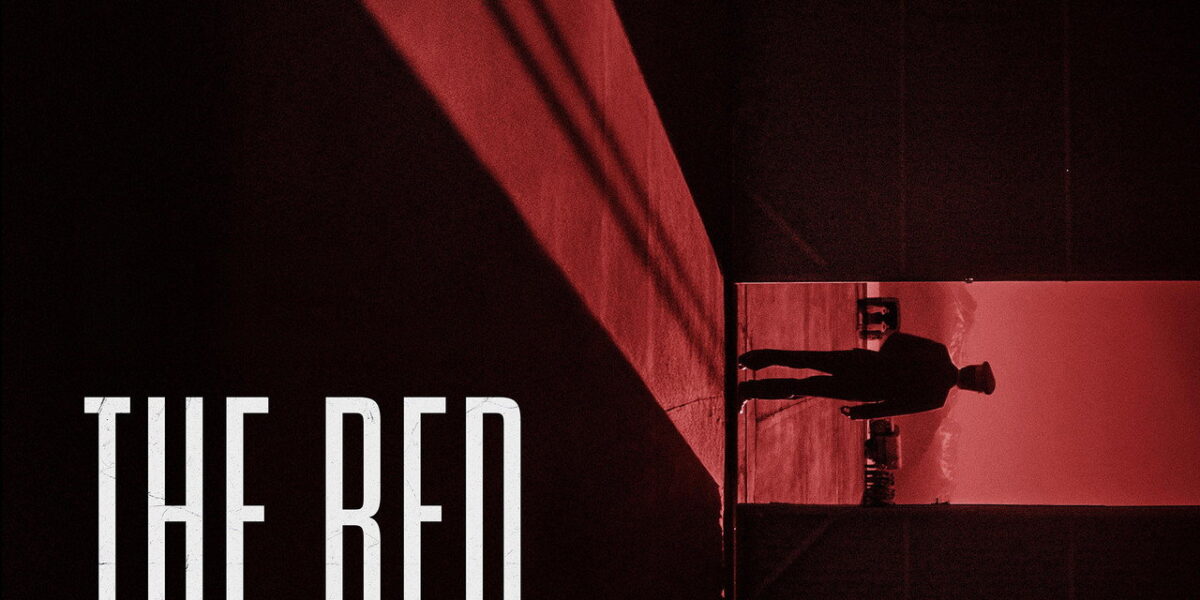
The Red Hangar: Honest Review — Is It Worth Watching? | 7.5/10
The Red Hangar is a tense, morally claustrophobic portrait of complicity that lands harder than most recent political dramas, though it occasionally stumbles under its own weight. If you’re hungry for lean, character-driven cinema about impossible choices during fascist terror, this Chilean thriller absolutely demands your attention.
| Director | Juan Pablo Sallato |
| Cast | Nicolás Zárate, Boris Quercia, Marcial Tagle, Catalina Stuardo, Arón Hernández |
| Runtime | 81 min |
| Genre | Drama, History, Thriller |
| Year | 2026 |
The Red Hangar: The plot (no spoilers)
The Red Hangar drops you into Chile’s 1973 military coup with zero fanfare or hand-holding, following Air Force captain Jorge Silva as the world around him implodes into state terror. The premise is deceptively simple: Silva must decide whether to become a cog in the repression machine or risk everything to protect the hunted. There’s no grand gesturing here, just the suffocating intimacy of a man watching democracy die from inside a military base.
The film moves like a pressure cooker that never quite reaches boiling point, which is both its gift and its curse. Sallato’s work trades spectacle for suffocation, building dread through quiet conversations and lingering gazes rather than scenes of overt violence. You’re watching a soul get systematically dismantled, and the 81-minute runtime means every second counts—there’s no breathing room, no melodramatic release.
Acting & direction
Nicolás Zárate carries the entire film on his shoulders as Silva, and he’s absolutely magnetic in the role—all suppressed rage and moral vertigo playing across a face that registers each ethical compromise like a wound reopening. Boris Quercia and Marcial Tagle provide granite-faced opposition, while Catalina Stuardo and Arón Hernández anchor the humanity that Silva is desperately trying to preserve. The ensemble work is uniformly sharp, with nobody wasting a moment of screen time.
Sallato’s direction is deliberately austere—the cinematography favors concrete and shadow, and the base itself becomes a character, a maze designed to trap rather than protect. The score is minimal and occasionally jarring, which works when it lands but feels overwrought in quieter moments. Pacing-wise, the film trusts its audience completely, moving at the speed of moral crisis rather than plot mechanics, which is admirable but occasionally drags things toward stasis.
The strengths
- Zárate’s performance is a masterclass in restraint, making Silva’s internal collapse feel devastatingly real and intimate rather than theatrical.
- The film refuses to sanitize or simplify the machinery of state terror, showing how ordinary institutional structures become instruments of horror when ideology takes the wheel.
- At 81 minutes, there’s not a wasted frame—Sallato understands that constraint breeds intensity, and every scene earns its place in the narrative.
- The moral ambiguity never becomes fence-sitting; instead, the film makes Silva’s impossible position genuinely agonizing because we understand the cost of every choice he faces.
The weaknesses
- The third act loses some narrative momentum, retreating into abstract despair when a more visceral confrontation might have crystallized the themes more powerfully.
- Some supporting characters feel undercooked, existing primarily as ideological positions rather than fully realized human beings with their own contradictions and depths.
Who should watch it
This one’s tailored for viewers who’ve digested psychological thrillers like A Prophet or The Killing and hunger for cinema that doesn’t flinch from institutional brutality. If you’re drawn to historical dramas that treat politics as lived experience rather than lecture notes, or if you appreciate actors who can carry entire films through sheer presence and vulnerability, then the film will satisfy that appetite completely. Absolutely not for people seeking comfortable entertainment.
Final verdict
The Red Hangar is a rigorous, uncompromising piece of political cinema that trusts viewers to sit with discomfort and moral vertigo. Sallato’s direction and Zárate’s performance create something genuinely haunting about institutional complicity and the cost of standing still. It’s not without flaws—pacing dips in the stretch run, and some characters remain sketches—but what remains is powerful enough to linger long after the credits roll. A solid 7 out of 10 that will reward patient, attentive viewers willing to meet it on its own deliberately paced terms.
FAQ
What is The Red Hangar about?
An Air Force captain during Chile’s 1973 military coup must choose between participating in state repression or helping political prisoners survive within his military base, facing impossible moral compromises that erode his humanity.
Is The Red Hangar a true story?
The film is set against the historical backdrop of Chile’s 1973 coup, though the character of Jorge Silva and specific narrative events are fictional dramatizations of the period’s institutional violence and personal moral crises.
How long is The Red Hangar?
The film runs 81 minutes, a deliberately lean runtime that prioritizes intensity and psychological pressure over sprawling narrative exposition.
Who plays Jorge Silva in The Red Hangar?
Nicolás Zárate delivers a career-defining performance as Air Force captain Jorge Silva, anchoring the entire film with his nuanced portrayal of moral collapse and institutional complicity.
Where can I watch The Red Hangar?
Check IMDB for current streaming availability and theatrical release information in your region.