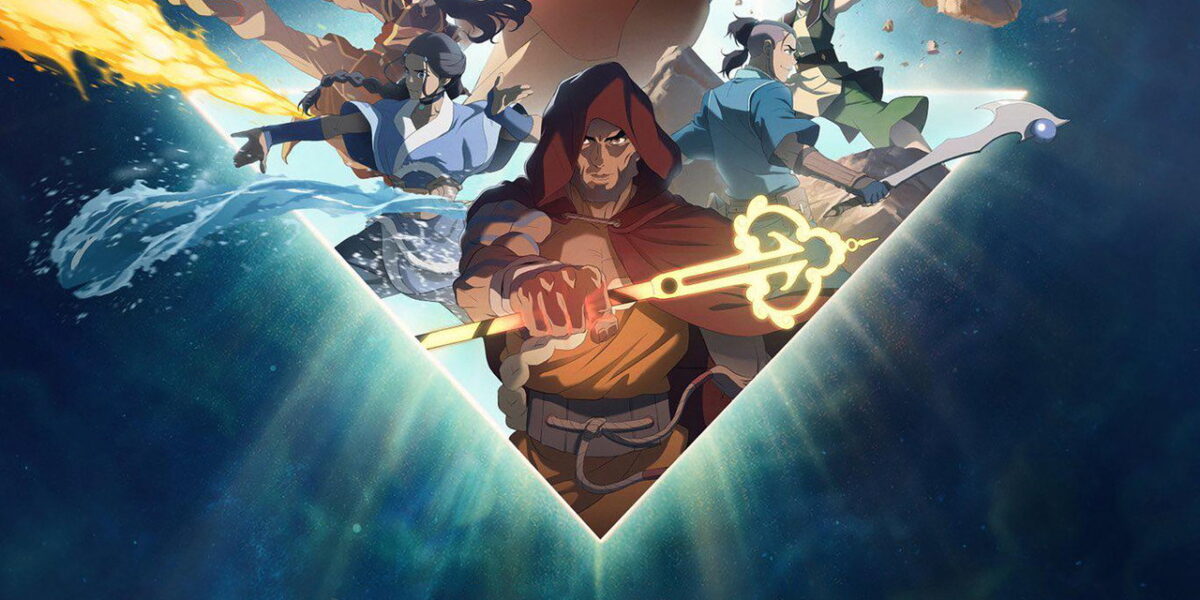
Avatar Aang: The Last Airbender: Ending Explained — Ultimate Breakdown
Few animated films carry the weight of a civilization’s grief and hope simultaneously, and Avatar Aang: The Last Airbender does exactly that with breathtaking emotional precision. Directed by Lauren Montgomery, this 2026 return to a beloved world is no mere nostalgic exercise — it is a meditation on legacy, sacrifice, and the terrifying cost of peace. This analysis dives deep into its final act, unpacking every layer of meaning hidden beneath the stunning animation and Eric Nam‘s quietly devastating vocal performance.
Avatar Aang: The Last Airbender: What happens at the end
The film’s closing sequence finds Aang reaching the sacred site where the ancient power — revealed to be a form of collective Airbender spiritual memory, dormant within the earth itself — has been hidden for centuries. His enemies, led by a ruthless coalition seeking to weaponize this energy for territorial dominance, arrive simultaneously. A devastating aerial confrontation erupts, pushing Aang to the absolute limits of his bending and his emotional endurance, forcing him to choose between power and preservation.
Rather than absorbing the ancient energy himself, Aang makes the film’s most radical choice: he releases it entirely, dispersing the spiritual memory across the world’s winds so no single force can ever claim it. The antagonists are left with nothing, their ambitions dissolved. Aang collapses, and for a suspended, agonizing moment, the screen goes silent. Then his friends — voiced with remarkable warmth by Román Zaragoza, Jessica Matten, and Steven Yeun — surround him, and he breathes again. The Air Nomad culture is not restored, but it is everywhere.
The deeper meaning
The act of dispersal is the film’s central metaphor, and it is genuinely radical in its implications. Montgomery‘s work refuses the comfortable fantasy of total restoration. Instead, it argues that culture cannot be owned, hoarded, or weaponized — it can only be lived, shared, and released into the world through the people who carry it. Aang does not save the Air Nomads by rebuilding them as they were. He saves them by ensuring they can never be erased again, because they now exist everywhere at once.
This is also a profound statement about grief itself. The film suggests that the healthiest relationship with loss is not reconstruction but transformation. Montgomery is clearly asking her audience — many of whom grew up with this world — to consider what it means to honor something without imprisoning it in amber. The ending does not offer catharsis through triumph; it offers something quieter and more enduring: the peace of letting go without forgetting.
Hidden details & easter eggs
Eagle-eyed viewers will notice that the wind patterns during the final dispersal sequence visually mirror the opening frames of the film, where young Aang is shown playing in the air currents of the Eastern Air Temple. This circular visual design is not accidental — it is Montgomery‘s way of encoding the entire film’s thematic arc into a single image. Additionally, the musical score briefly quotes a melody introduced in a seemingly throwaway scene mid-film where Aang hums to himself while meditating, now revealed as a fragment of Airbender ceremonial song.
Connections to the rest of the film
The ending’s emotional power is inseparable from a crucial piece of foreshadowing planted in the film’s first act, when a scholar tells Aang that the ancient power “belongs to the air itself, not to any who breathe it.” At the time, the line reads as exposition. By the finale, it functions as the film’s thesis statement, retroactively recontextualizing every scene where Aang struggles with the burden of being the last. He was never meant to carry the culture alone — that was always the wrong interpretation of his role as Avatar.
Fan theories
Several compelling theories have emerged around the ending. The most persuasive argues that Aang‘s collapse after the dispersal was not exhaustion but a brief spiritual death — a moment where he genuinely crossed into the spirit world and chose to return, mirroring classic Avatar lore. Evidence includes the subtle blue tinge to his skin during the silence. A second theory proposes that the dispersed energy will manifest as new Airbenders being born across all nations, setting up a sequel. Against this: Montgomery has suggested the ending is deliberately final. A third reading frames the entire sequence as Aang‘s dream, though the visual continuity makes this unlikely.
FAQ
Does Aang restore the Air Nomad culture at the end of the film?
Not in a literal sense. Rather than rebuilding the Air Nomads as a distinct civilization, Aang disperses their ancient spiritual energy across the entire world, ensuring the culture’s essence survives everywhere but belongs to no one exclusively.
Who are the main antagonists and what do they want?
The antagonists are a coalition of power-hungry factions seeking to weaponize the dormant Airbender spiritual memory as a tool for geopolitical dominance, threatening the fragile peace established after great sacrifice.
What is the ancient power at the center of the plot?
The ancient power is revealed to be a form of collective Airbender spiritual memory, encoded into the earth itself over centuries — essentially the accumulated consciousness and wisdom of the lost Air Nomad civilization.
Is Dave Bautista playing a villain in the film?
Dave Bautista‘s character occupies a morally complex space — positioned initially as an adversary, his motivations are gradually revealed to stem from cultural displacement and grief rather than pure malice, making him one of the film’s most nuanced figures.
Does the ending set up a sequel?
The ending is deliberately open to interpretation. While the dispersal of spiritual energy could theoretically birth new Airbenders worldwide, director Lauren Montgomery has indicated the story is meant to feel complete, prioritizing emotional resolution over franchise continuation.
For cast details and community discussion, visit the film’s page on IMDB.