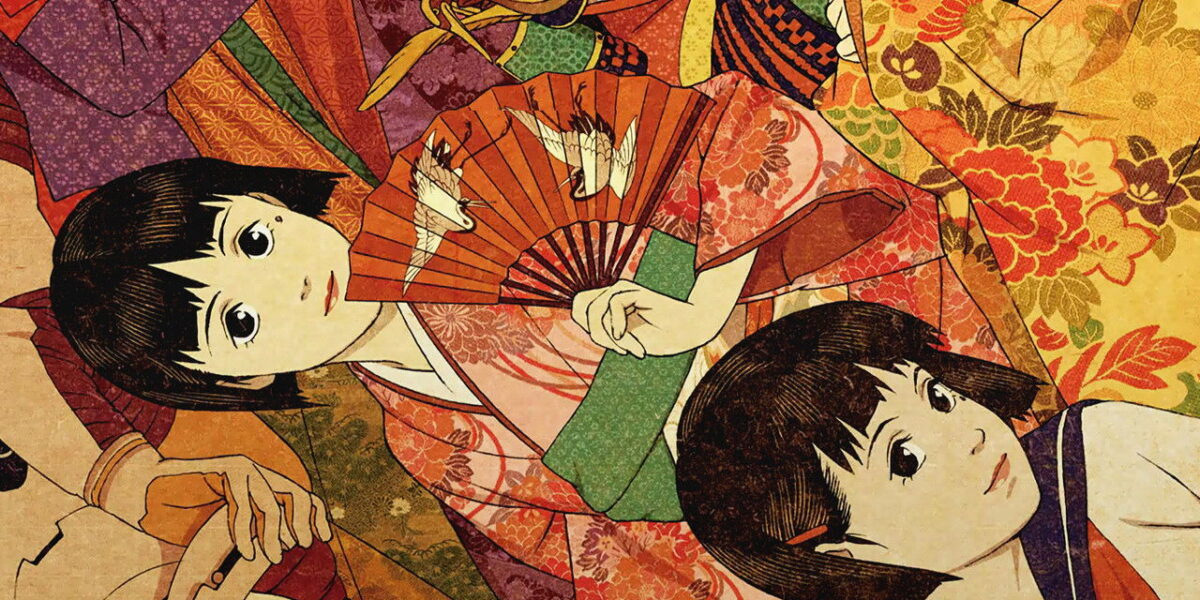
Millennium Actress: Honest Review — Is It Worth Watching? | 7.8/10
Millennium Actress is a devastatingly clever film that weaponizes the language of cinema itself to tell a story about the cost of chasing dreams and the lies we tell ourselves to survive them. If you love films that respect your intelligence and aren’t afraid to get weird with narrative structure, this is absolutely worth your 87 minutes.
| Director | Satoshi Kon |
| Cast | Miyoko Shoji, Mami Koyama, Fumiko Orikasa, Showko Tsuda, Shozo Iizuka |
| Runtime | 87 minutes |
| Genre | Animation, Drama, Romance |
| Year | 2002 |
Millennium Actress: The plot (no spoilers)
Millennium Actress follows a documentary filmmaker who tracks down the reclusive Chiyoko Fujiwara, a legendary actress who vanished decades ago at the height of her career. When he returns a mysterious key she lost long ago, she agrees to recount her life story, and what unfolds is a breathtaking journey through cinema history, romance, obsession, and the blurred line between performance and identity. The film doesn’t just tell you what happened—it shows you how cinema itself becomes the architecture of memory.
The movie operates in a register somewhere between biography, psychological drama, and metafilm commentary that would make Godard smile. You’ll encounter film noir, samurai epics, period pieces, and surrealist sequences all seamlessly woven into Chiyoko’s narrative, each one reflecting how she experienced or reinterpreted her own life through the lens of the movies she made. The tone oscillates between melancholic and magical, never settling into easy sentiment—instead it earns every emotional beat through sheer formal audacity.
Acting & direction
Miyoko Shoji voices the elderly Chiyoko with a trembling vulnerability that makes you believe this woman has spent a lifetime performing and forgotten how to stop, while Mami Koyama captures young Chiyoko’s fierce idealism and romantic naïveté with stunning vocal texture. The supporting cast, particularly Fumiko Orikasa as a younger iteration, handles the constant tonal shifts without ever breaking character or pulling you out of the strange, dreamlike logic the film establishes. Every voice actor treats this material like they’re performing Shakespeare, not reading an animation script.
Satoshi Kon’s directorial hand is absolutely everywhere—the way he cuts between Chiyoko’s memories and the present-day interview, the genre-shifting cinematography that mirrors whatever film she’s recalling, the score that swells and retreats like an emotional tide. He trusts his audience completely, refusing to explain what’s happening or why the film keeps transforming into different visual styles. The animation itself is stunning, with character animation that captures microexpressions and hand movements that sell the performance layer built into every frame.
The strengths
- The narrative structure is genuinely innovative—using cinema itself as the language through which memory operates rather than just a backdrop for the story.
- The film maintains an almost impossible tonal balance between melancholy and wonder, heartbreak and beauty, without ever feeling manipulative or saccharine.
- Kon’s visual storytelling is so precise that scenes communicate emotional truths without a single line of dialogue, especially in the film’s final act.
- The romance at the film’s core has a bittersweet, complicated quality that rejects easy resolution and feels genuinely earned through the narrative’s architecture.
- The cinematography and animation design shift genres constantly yet never feel gimmicky—each shift deepens your understanding of how Chiyoko processes her own story.
The weaknesses
- The film’s conceptual ambition occasionally outpaces its emotional clarity—there are moments where you’re so busy admiring the formal ingenuity that the human stakes recede into the background.
- The documentary filmmaker character remains somewhat underdeveloped as a presence, serving more as a narrative device than a fully realized character whose perspective we genuinely care about until late in the film.
Who should watch it
This film speaks directly to cinephiles, people obsessed with how cinema works as a language and what it means to live inside fictional narratives. If you’ve loved works like Mulholland Drive, The Truman Show, or other films that deconstruct performance and reality, Millennium Actress is essential viewing. It’s also for anyone who understands that sometimes the only way to talk about emotional truth is through formal experimentation and visual poetry rather than straightforward narrative exposition.
Final verdict
This is Satoshi Kon at peak creative power—a filmmaker unafraid to let his medium dictate his storytelling rather than the other way around. Millennium Actress understands something fundamental about how movies work on the human brain, how we use cinema to construct and reconstruct ourselves, and how the line between performer and person dissolves the moment you decide it does. It’s a film that respects your intelligence, challenges your expectations, and absolutely gutted me by the final frame. This is not just animated film—this is cinema thinking about cinema, and it deserves to be in conversation with the greatest films ever made about the movies themselves. Rating: 8.5/10, and only because I’m being stingy about perfection.
FAQ
Is Millennium Actress worth watching in 2024?
Absolutely—it’s more relevant now than ever. The film’s exploration of identity, memory, and how we construct narratives through media speaks directly to how we curate ourselves online and experience life through screens.
Do I need to understand anime or animation to enjoy this film?
Not at all. The animation is gorgeous, but the film works because of its story and structure, not because it’s anime. Someone who’s never watched a single animated film will be just as moved as animation fans.
Is Millennium Actress confusing or hard to follow?
It requires attention and doesn’t hold your hand, but it’s not deliberately obscure. The narrative logic becomes clear once you understand that cinema history is literally the language through which Chiyoko tells her story.
What’s the connection between the filmmaker and Chiyoko?
I won’t spoil it, but it’s the emotional core of everything—the reason why her story matters to him, and why understanding that connection transforms how you interpret everything that came before the final revelation.
How does Millennium Actress compare to Satoshi Kon’s other films?
It’s his most formally ambitious work and arguably his masterpiece. While Perfect Blue is more psychologically intense and Paprika is more visually surreal, Millennium Actress achieves a perfect synthesis of form and emotion that neither quite reaches.
Scopri di più su IMDB.