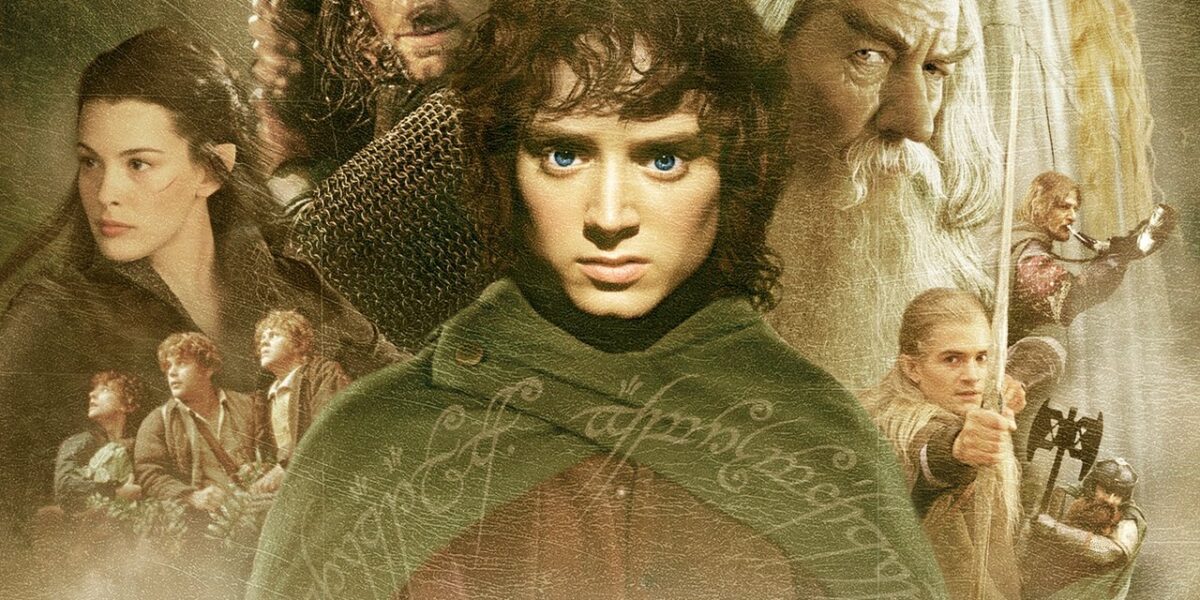
The Lord of the Rings: The Fellowship of the Ring: Ending Explained — Ultimate Breakdown
Few endings in cinema history carry the emotional and philosophical weight of The Lord of the Rings: The Fellowship of the Ring. Peter Jackson doesn’t close his 2001 epic with triumph — he closes it with fracture, sacrifice, and the terrifying weight of solitary purpose. What appears to be a defeat is, in truth, the most profound act of heroism the film has yet shown us. This analysis digs beneath the surface of that shattering finale.
The Lord of the Rings: The Fellowship of the Ring: What happens at the end
At Amon Hen, the Fellowship disintegrates under the Ring’s corrupting influence. Boromir, consumed by the Ring’s power, attacks Frodo before recovering his senses in a moment of agonized shame. Frodo slips on the Ring and flees, arriving at the shore of the Anduin where he prepares to cross alone into Emyn Muil. Sam, refusing to be left behind despite being unable to swim, plunges into the river — forcing Frodo to pull him into the boat, restoring a bond that will carry both hobbits through what lies ahead.
Meanwhile, Uruk-hai warriors slaughter the Fellowship’s rear guard. Boromir makes his redemptive last stand, absorbing three black-feathered arrows while protecting Merry and Pippin, who are captured and carried east. Aragorn reaches the dying Boromir, who confesses his failure and pledges loyalty to his king in a scene of devastating tenderness. The remaining Fellowship members — Aragorn, Legolas, and Gimli — choose not to follow Frodo but to pursue the captured hobbits, splitting the narrative into the diverging threads that will define the next two films.
The deeper meaning
The ending is a masterclass in the symbolism of burden and isolation. The Ring is not merely a weapon — it is a metaphor for the corrupting nature of absolute power, and Jackson makes this viscerally clear by showing how it fractures even the most noble intentions. Frodo’s decision to go alone is not cowardice; it is a profound act of love. He removes himself from the equation of corruption, shielding his companions from a poison that has already nearly claimed Boromir and silently tempted nearly everyone in the Fellowship.
Jackson’s intention is to redefine what heroism looks like in an epic fantasy. By denying the audience a conventional victory — no battle won, no enemy defeated — the director forces us to confront a deeper truth: that the most meaningful struggles are internal, invisible, and agonizingly lonely. Frodo doesn’t triumph here; he simply endures, and Jackson frames that endurance as something more heroic than any sword blow Aragorn could deliver. The film insists that carrying an unbearable weight, step after step, is the truest form of courage available to any of us.
Hidden details & easter eggs
Jackson embeds remarkable visual poetry throughout the finale. When Frodo puts on the Ring at Amon Hen, the sound design collapses into a distorted, whispering void — a sonic motif that aurally represents the Ring’s reality pulling against the world’s. Watch closely during Boromir‘s death scene: his hand releases his broken horn, a visual echo of the horn’s earlier sounding that brought no help. Sean Bean‘s performance contains a subtle tremor in his eyes before the final arrow strikes, a barely perceptible flicker of peace replacing the earlier anguish of his corruption and shame.
Connections to the rest of the film
The ending’s power is inseparable from what Jackson carefully plants throughout the preceding three hours. Boromir‘s fall is prepared with exquisite foreshadowing: his very first scene reveals his obsession with using the Ring as a weapon, and every subsequent interaction with Frodo carries an undercurrent of dangerous longing. Sam‘s leap into the river pays off Gandalf’s early instruction to never leave Frodo‘s side, transforming a throwaway line of comic concern into one of the most emotionally resonant moments of narrative consistency in modern blockbuster filmmaking.
Fan theories
One compelling theory argues that Frodo chose to abandon the Fellowship not primarily out of fear for their safety, but because the Ring had already begun subtly steering him toward isolation — separating its bearer from protective bonds. Evidence lies in how quickly and decisively he acts once alone. A counter-theory suggests Aragorn deliberately let Frodo go, understanding that proximity to a king of Men would only intensify the Ring’s pull. The text supports both readings, and Jackson may have intentionally left this ambiguity intact, making the ending richer with each revisit. You can explore cast details further on IMDB.
FAQ
Why does Frodo decide to leave the Fellowship alone at the end?
Frodo leaves alone after witnessing Boromir‘s corruption, realizing that the Ring endangers anyone near him. His solitary departure is an act of protection, not abandonment — he cannot risk the Ring destroying those he loves most.
Does Boromir survive the ending of the Fellowship of the Ring?
Boromir, played by Sean Bean, dies from his arrow wounds at the end of the film. His death serves as both a redemption arc conclusion and a devastating warning about the Ring’s power to corrupt even honorable men.
What happens to Merry and Pippin at the end?
Merry and Pippin are captured by the Uruk-hai during the battle at Amon Hen. Their kidnapping drives the subplot that Aragorn, Legolas, and Gimli pursue across the entirety of the second film in the trilogy.
Why does Sam jump into the river if he cannot swim?
Sam‘s leap is the film’s definitive statement on loyalty — he chooses certain drowning over abandoning Frodo. It directly fulfills Gandalf‘s earlier charge to never leave the Ring-bearer’s side, regardless of the personal cost.
What does the breaking of the Fellowship symbolize thematically?
The Fellowship’s dissolution represents the impossibility of collective resistance against deeply personal corruption. Jackson uses the fracture as a metaphor for how power ultimately isolates those who carry it, no matter how strong the bonds surrounding them.