Demon Slayer: Kimetsu no Yaiba Infinity Castle: Ending Explained — Ultimate Breakdown
Demon Slayer: Kimetsu no Yaiba Infinity Castle arrives in 2025 as one of the most anticipated animated theatrical events in recent memory, and its ending delivers a seismic emotional payload that demands careful unpacking. Directed by Haruo Sotozaki, this first chapter of the Infinity Castle arc doesn’t merely conclude — it transforms, leaving audiences suspended between devastation and desperate hope in ways that resonate far beyond the screen.
Demon Slayer: Kimetsu no Yaiba Infinity Castle: What happens at the end
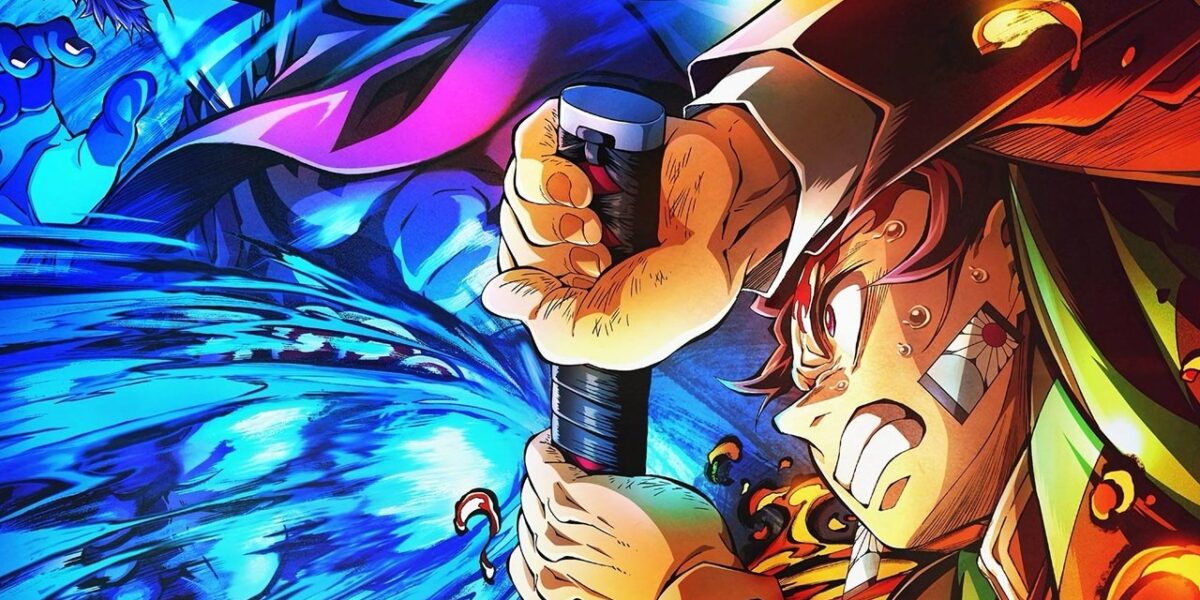
The film’s climax unfolds across the impossible architecture of the Infinity Castle itself, as Tanjiro Kamado and the surviving Hashira push against the relentless advance of the Upper Rank demons. Akaza, the Upper Rank Three demon voiced with chilling precision by Akira Ishida, confronts Flame Hashira Rengoku‘s spiritual legacy once more — this time through Tanjiro‘s burning refusal to surrender. The battle escalates into something that transcends physical combat, becoming a reckoning with mortality, grief, and the cost of power.
In the film’s final sequences, the assault by Muzan Kibutsuji‘s forces reaches a devastating crescendo. Several Hashira sustain catastrophic injuries while managing to neutralize key Upper Rank threats, but victory feels pyrrhic and incomplete. The closing moments position Tanjiro and Nezuko at the threshold of an even greater confrontation, with Muzan himself finally stepping forward from the shadows. The film ends not on resolution but on the razor’s edge of an inevitable final collision, making the silence after the credits almost unbearable.
The deeper meaning
At its spiritual core, the Infinity Castle arc is a meditation on inherited grief. The castle itself — a structure with no fixed orientation, where floors become ceilings and exits loop back into entrances — functions as a powerful metaphor for trauma: a psychological space where the past cannot be escaped, only navigated. Tanjiro‘s journey through it mirrors the grief cycle, forcing him to confront loss not as something to be overcome but as something to be carried forward with purpose and dignity.
Sotozaki‘s directorial intention seems inseparable from the franchise’s central thesis: that humanity’s greatest strength is its capacity for empathy even in the face of monstrous opposition. The demons, particularly Akaza, are not presented as purely evil — they are tragedies. By granting the antagonists genuine emotional backstories, the film refuses the comfort of simple moral binaries, demanding that audiences feel the weight of every death on both sides of the blade.
Hidden details & easter eggs
Attentive viewers will notice that the color palette of the Infinity Castle shifts subtly depending on which Hashira occupies the frame — Rengoku‘s spiritual presence is evoked through warm amber and gold tones bleeding into scenes featuring Tanjiro, a visual foreshadowing of inherited will. Additionally, the architectural motifs of the castle echo traditional Japanese funerary iconography, specifically the spiraling patterns found on certain Edo-period grave markers, embedding the entire battleground within an aesthetic language of death and remembrance that rewards close analysis.
Connections to the rest of the film
The film plants its emotional seeds early through deliberate foreshadowing. The opening sequences emphasize breathing — both as a combat technique and as a symbol of fragile, precious life — which pays off devastatingly when characters lose the ability to maintain their forms under extreme duress. The recurring motif of fire, established through Rengoku‘s legacy in the Mugen Train arc, returns here as something that both destroys and illuminates, creating a thematic continuity that makes the narrative feel genuinely cumulative rather than episodic.
Fan theories
One compelling theory argues that Nezuko‘s evolving resistance to sunlight represents a deliberate narrative metaphor for integration rather than cure — that she is not becoming human again but becoming something entirely new. Evidence supports this reading in her altered demon markings. A second theory suggests Muzan‘s delayed appearance is intentional narrative architecture: his absence throughout most of the film makes him more terrifying than any direct confrontation could. A third, more speculative reading proposes that the castle’s impossible geometry mirrors Tanjiro‘s subconscious, making every battle an interior one. You can explore cast details further on IMDB.
FAQ
Does Tanjiro survive the ending of Infinity Castle?
Tanjiro survives the events of this first chapter, though severely tested. The film ends with him facing Muzan‘s direct threat, leaving his ultimate fate deliberately unresolved as a narrative bridge to subsequent chapters.
What happens to Akaza at the end of the film?
Akaza is ultimately defeated through the combined resolve of Tanjiro and Giyu, but his defeat is emotionally complex — his human memories resurface, framing his destruction as a form of painful liberation rather than simple victory.
Is Muzan Kibutsuji the final villain of Infinity Castle?
Muzan Kibutsuji serves as the looming ultimate antagonist whose direct confrontation is reserved for the arc’s later chapters. This film establishes his terrifying presence without fully unleashing him, functioning as a deliberate narrative escalation.
What does the Infinity Castle symbolize in the story?
The Infinity Castle functions as a metaphor for inescapable trauma and psychological entrapment. Its architecture — with no fixed up or down — represents a mental space where grief distorts perception and characters must fight to find their own orientation.
Is Demon Slayer: Kimetsu no Yaiba Infinity Castle a complete story?
This film is explicitly the first chapter of a multi-part theatrical arc, meaning it ends on an intentional cliffhanger. It delivers a self-contained emotional arc but requires subsequent installments for full narrative resolution.